Cart 0
Cart 0
english, eur
english
  • SHOP in € EUR
  • SHOP in $ USD
  • SHOP in £ GBP
français
  • ACHETEZ en € EUR
 

handcrafted italian leather sneakers, made to order

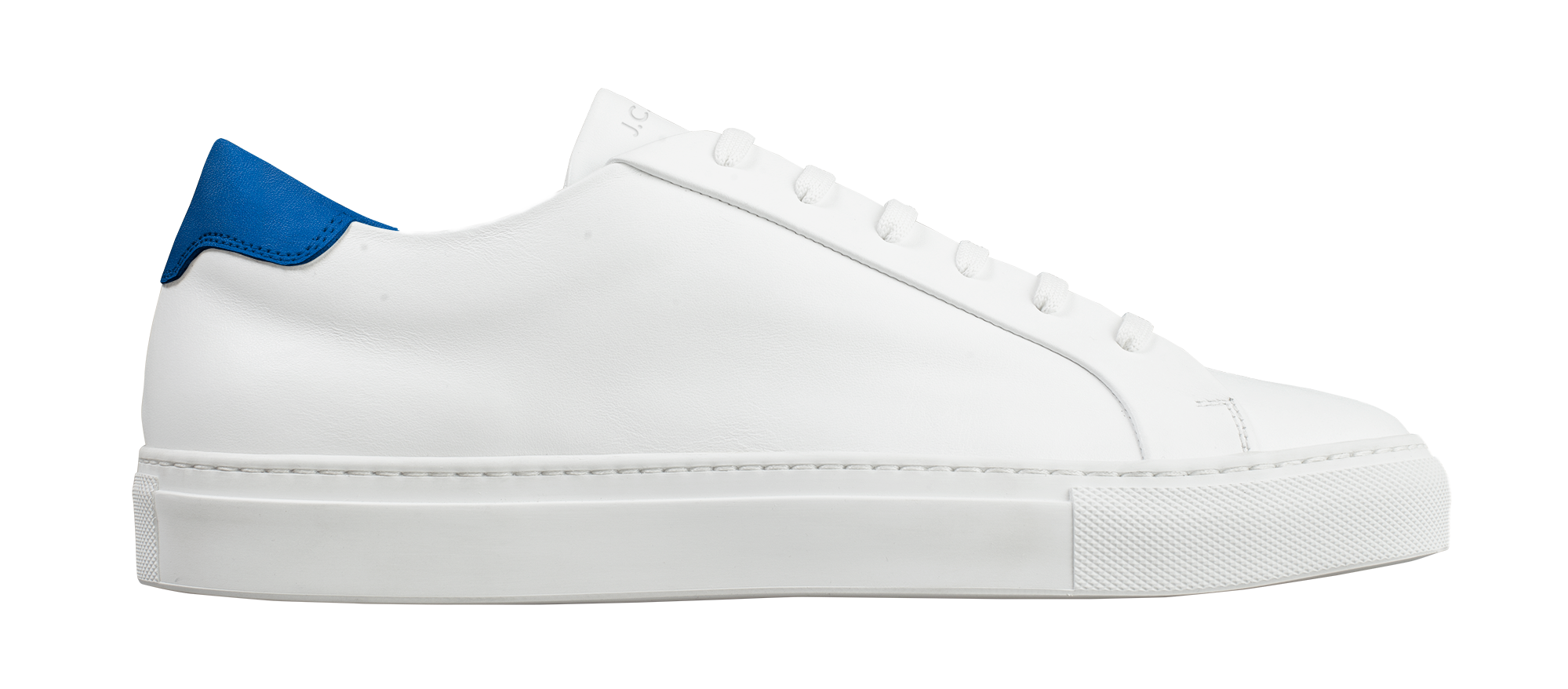
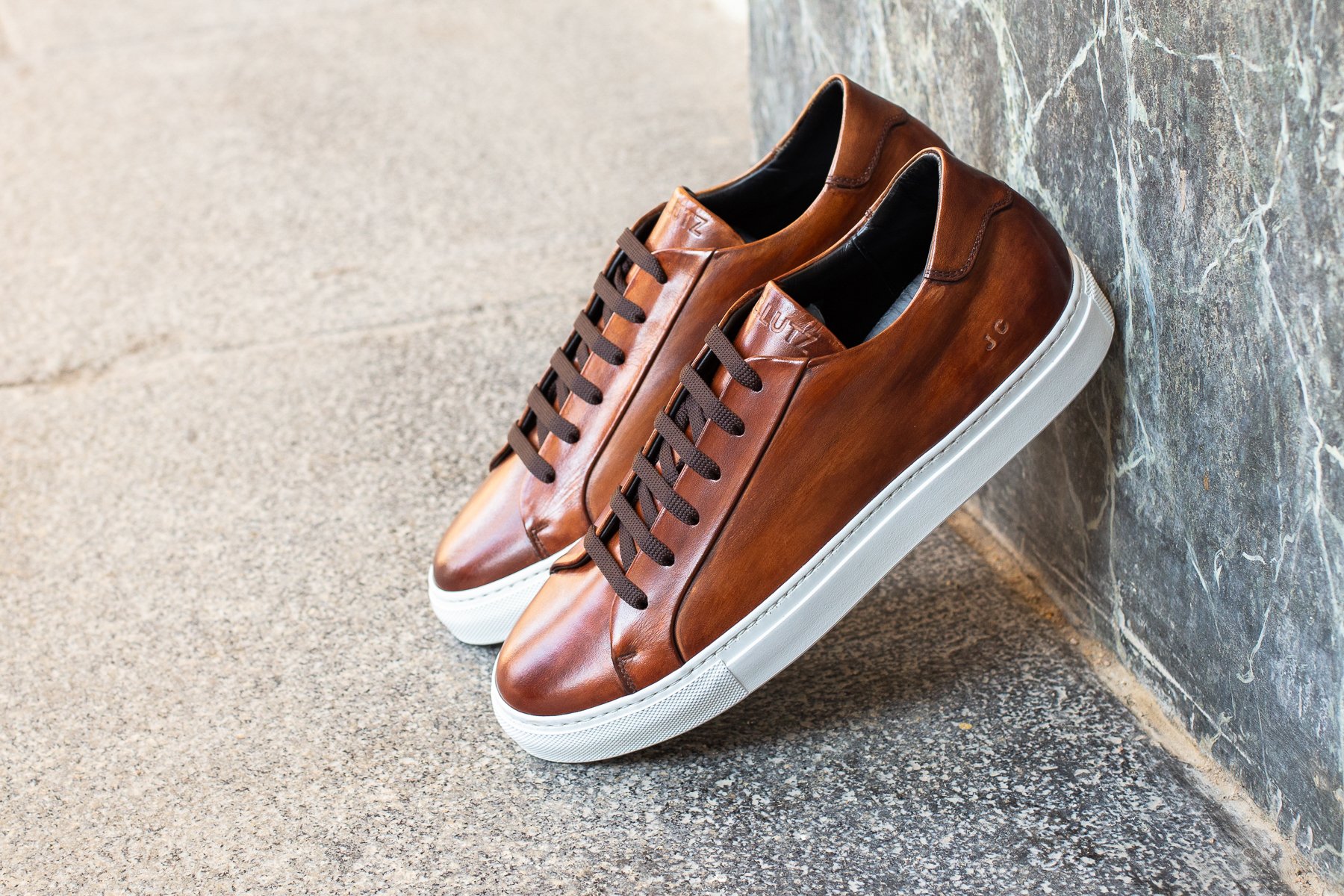
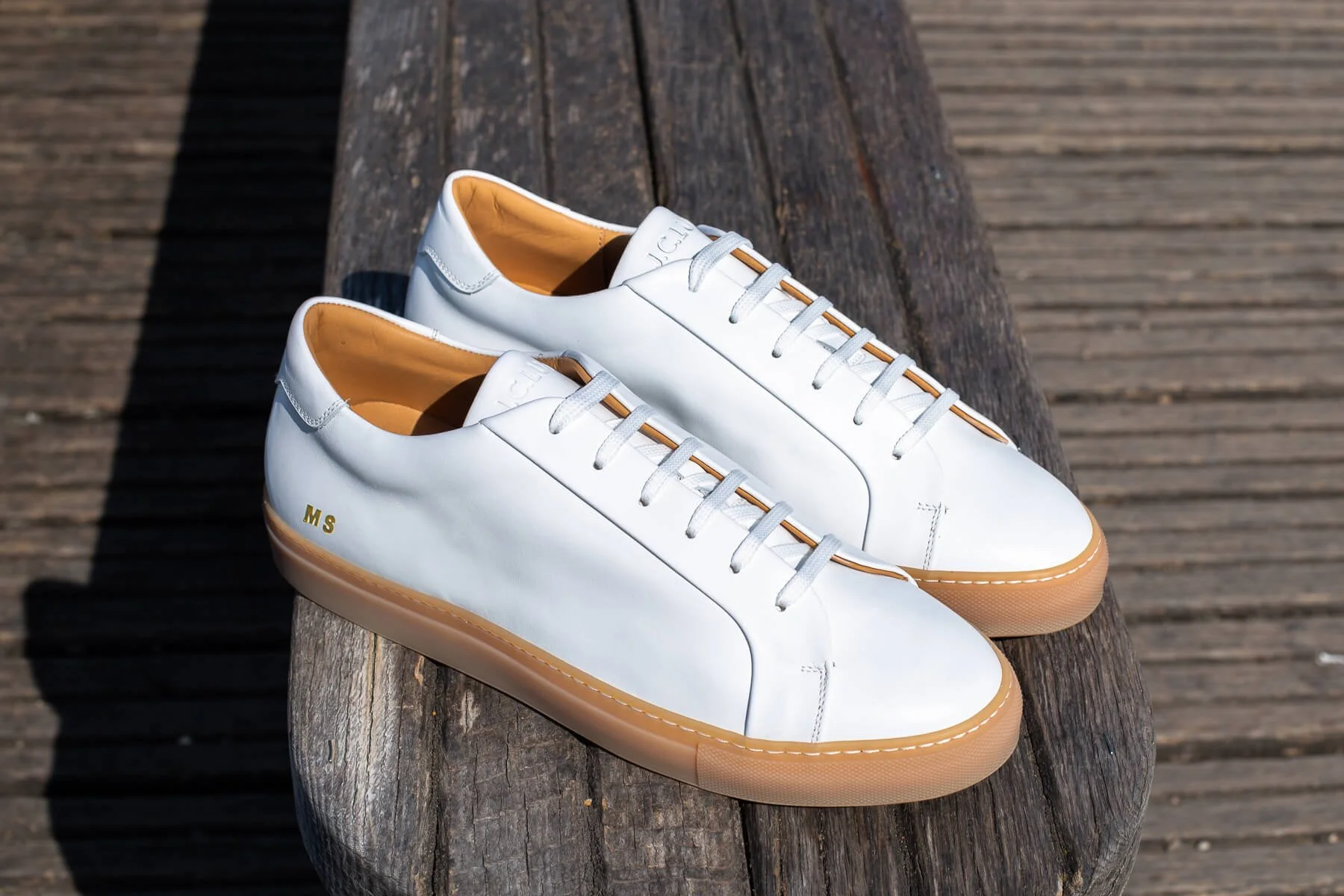
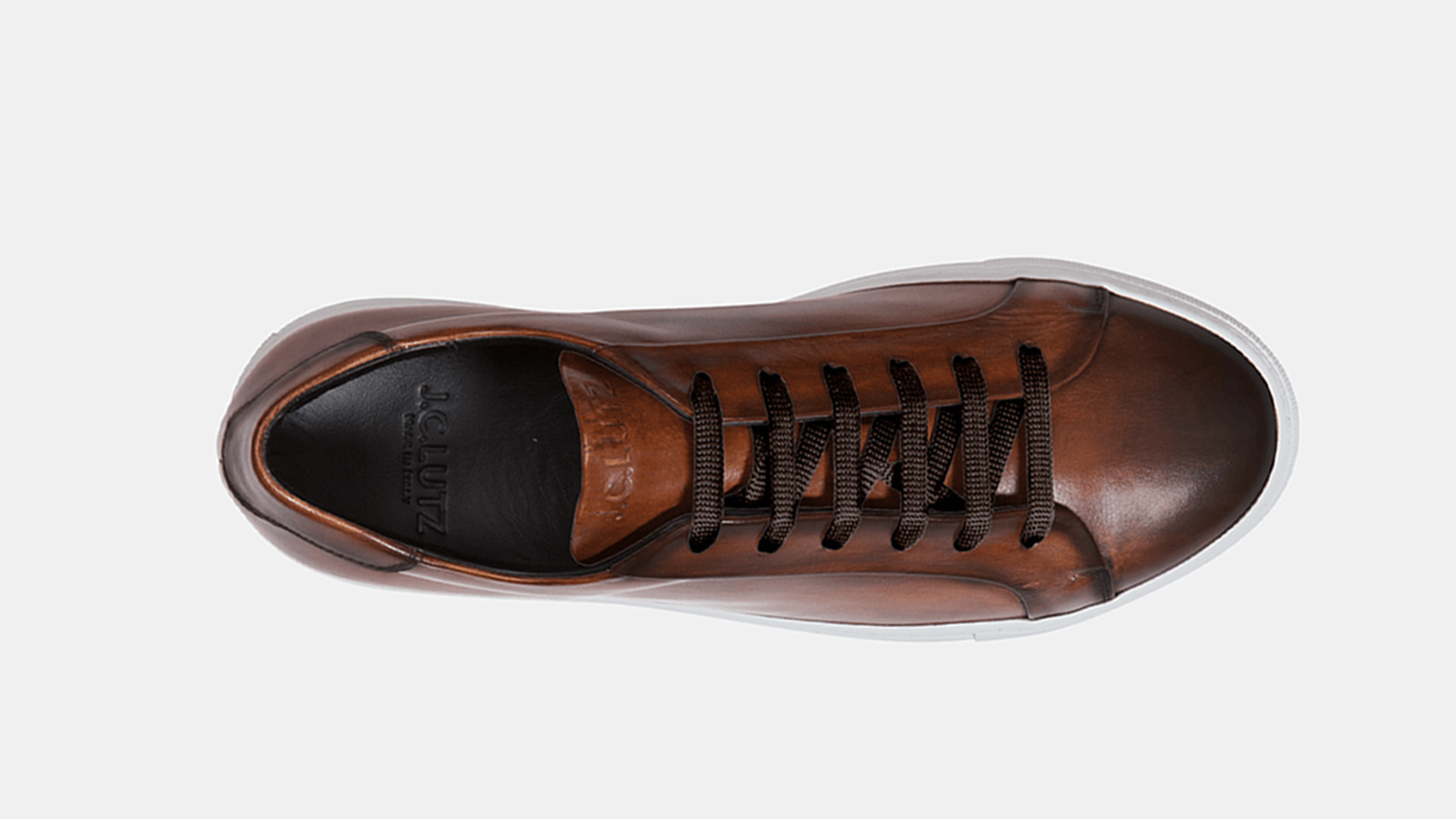
Born in Paris. Handcrafted in Italy. Made to order. – This sequence is a production standard, not a tagline. J.C.LUTZ builds Italian leather sneakers for buyers who want executive footwear that travels well, pairs with tailoring, and improves under sustained use rather than degrades from it.

 
m1.jpg


Choose Your Build: Materials, Construction, and Finish


A considered build starts with five components: leather upper, lining, footbed, midsole, and outsole. These determine whether the sneaker remains stable, comfortable, and coherent after repeated wear – not just at unboxing.

Full-grain leather with a smooth finish is the most uncompromised choice: it comes exclusively from hides that are completely free of imperfections, which means no surface treatment is required, and the natural fiber structure of the leather remains entirely intact.

That is precisely what makes it expensive – and what gives it the capacity to develop the deepest, most individual patina over time. Top-grain leather – listed as Calf in our design tool – is surface-corrected to a more uniform finish, which removes that rawness and makes it slightly more predictable in daily use; it sits, in terms of quality, between smooth full-grain and the surface-treated leathers below.

Grained leather – known in Italian craft as martellata – was originally developed to mask natural surface inconsistencies through embossing, though demand for its texture has long since made it a finish in its own right; it conceals minor scuffing more easily and reads as softer and less formal than its full-grain counterpart. Tumbled leather achieves a similar pebbled character through drum-softening rather than pressing, producing a more relaxed surface and handle suited to regular travel. Suede, worked from the underside of the hide rather than the grain surface, brings a soft napped texture and a distinctly relaxed character – widely used across premium sneaker construction for its lightness and tactile quality, though it benefits from more attentive care in wet conditions. Custom leather selection across these options should be guided by use pattern and wardrobe frequency rather than surface appeal alone.


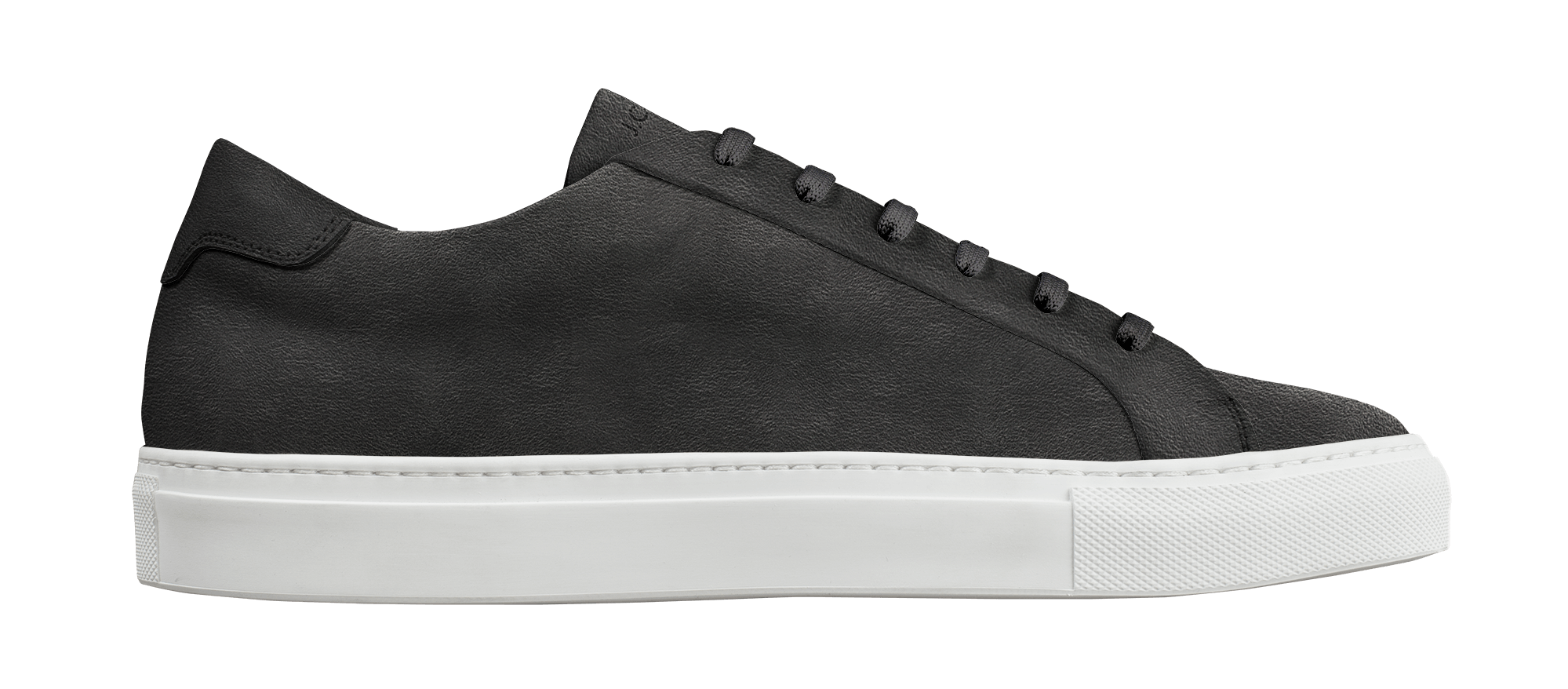
The last – the shoemaking last – defines stance and volume. A well-integrated cupsole construction pairs the rubber outsole to the midsole cleanly, preserving both stability underfoot and visual proportion from the side.

Proper cushioning and arch support determine whether the sneaker feels supportive over hours without collapsing into a shapeless casual shoe. Tongue padding, eyelet placement, and the lacing system all affect instep pressure management and heel slip control – details that matter more than most buyers anticipate before their first extended wear.

One structural detail that goes unseen but registers immediately over distance is the shank: a small, flexible metal bar embedded within the midsole that stabilizes the arch, maintains the shoe's longitudinal shape under load, and prevents the sole from torquing with each step.

J.C.LUTZ builds every pair with a shank as standard – more common in dress shoes, but almost impossible to find in sneakers – because long-term shape retention depends on what sits beneath the surface, not just what covers it.

Fully Customizable Design

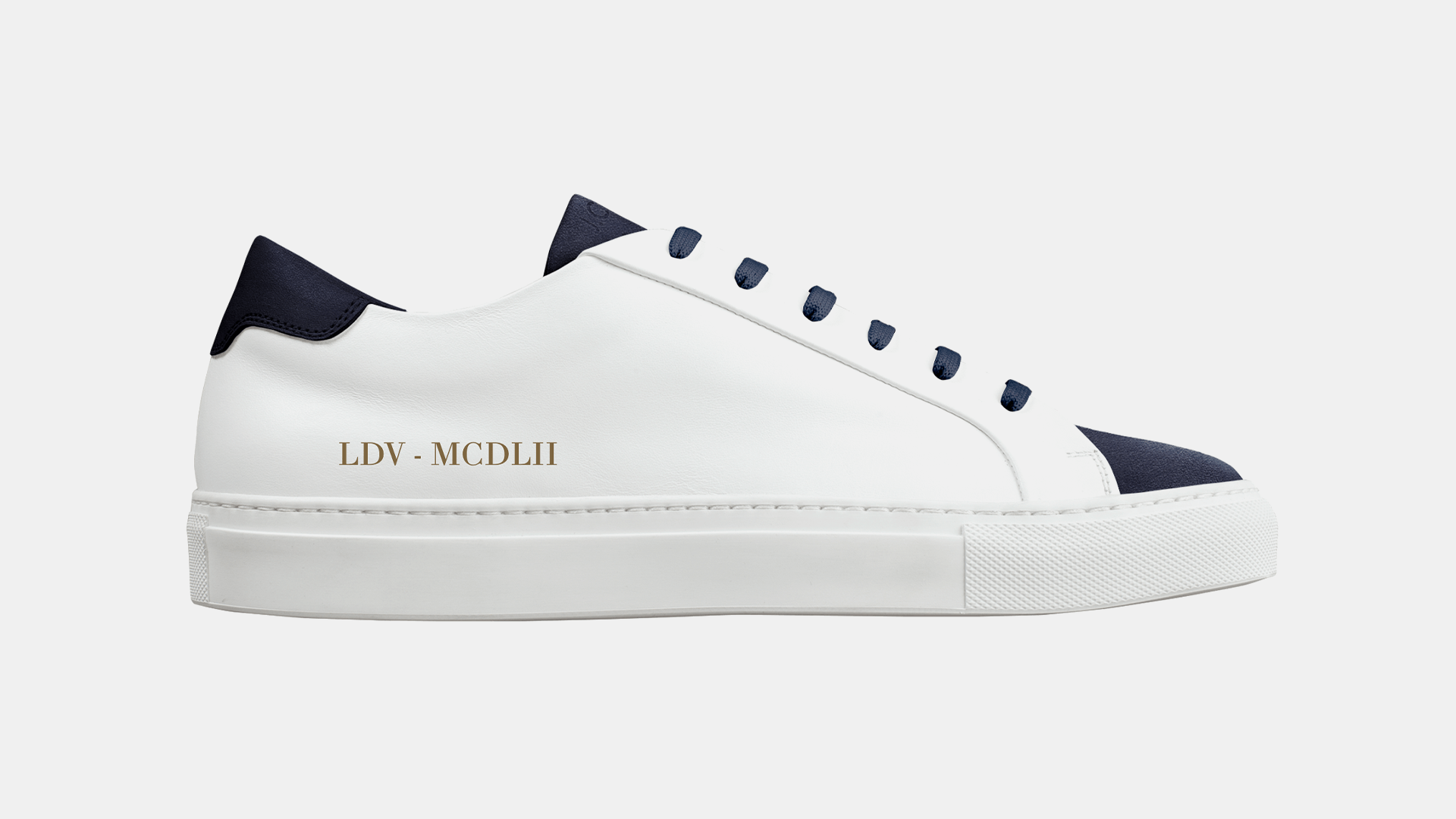
J.C.LUTZ offers a fully customizable design framework built around disciplined choices: custom color options, custom laces, leather finish, lining selection, and custom sole options.

The strongest made-to-order pair usually comes from restraint – clean lines, muted whites, dark neutrals, and refined textures that move between office, airport, dinner, and weekend settings without being tied to a single context.

Customization here is tied to construction, not surface decoration. That gives buyers control over how the shoe will live in a wardrobe over years of use – not just how it appears in a configurator. Paris design sensibility – an instinct for proportion, understatement, and considered detail – informs every build option available on the site.


Fit, Sizing, and Break-In

A correct fit should feel secure from the first wear. The heel counter should hold the rear foot in place, the toe box should allow natural spread, and the instep should feel held rather than compressed. Sizing guidance matters more than generic conversion charts here – handcrafted leather rewards precision because the leather upper and lining adapt gradually to your gait while the underlying shape remains largely unchanged.

Break-in should refine comfort, not rescue a poor size. Minor heel slip often settles with lacing adjustment, and the first few wears; persistent instep pressure or toe compression usually signals a volume issue rather than temporary stiffness. When in doubt, contact us before ordering.


Le Marche:
Where the Craft Actually Happens

Le Marche master shoemakers represent one of the World's most respected shoemaking ecosystems – craft there is a functional infrastructure, not a marketing claim. The region's expertise shows in pattern accuracy, balanced lasts, and hand-finishing that reflects accumulated generational skills applied to every pair rather than delegated to volume-driven shortcuts.

Material traceability is built into how Le Marche operates. Buyers can connect the leather upper, leather lining, and footbed directly to a family-run atelier working under EU-compliant sustainability standards and ethical labor practices. That accountability matters because careful work – burnishing, lasting, and hand-finishing – cannot be separated from the conditions in which people make the shoe.


The Standard Behind Every Pair

A pair worth owning starts with proof, not romance: real provenance, accountable production, and workmanship readable in pattern lines, stitch density, and sidewall stitching.

"Made in Italy" should mean custom leather selection, controlled assembly, and a maker willing to stand behind every detail – from the leather lining and insole fit to burnishing, finishing uniformity, and long-term structural integrity.

That process begins before assembly. At J.C.LUTZ, each hide is clicked – cut by hand, in the trade's own term – only after careful inspection for fiber direction, surface consistency, and placement across the hide.

Clicking by machine trades judgment for speed; clicking by hand means the person holding the knife determines which section of the hide produces which part of the upper, accounting for how the leather will move, crease, and wear over time. No step downstream fully recovers from a poorly clicked upper.

The same discipline extends to how edges and construction seams are handled. Where most sneakers – including those positioned as premium – leave the clicked leather edges exposed and conceal them with edge paint, J.C.LUTZ eliminates live edges entirely: every edge is hidden-stitched with the lining, leaving no raw leather visible and no painted finish masking what sits beneath.


The lace guards follow the same principle – stitched invisibly to the vamp so that no construction stitching is visible on the outer face of the shoe. Hidden stitching at this level is not a stylistic choice; it is a measure of how far a maker is willing to go when no one is likely to look.

Full-grain vegetable-tanned leather – hand-painted at the atelier – will show restrained creasing and hold shape through a measured break-in period, whether the pair is serving as business casual sneakers, travel-ready sneakers, or quiet luxury footwear for executive wear.

Vegetable tanning is a slower process than the chrome tanning standard in volume production, and it shows in how the leather responds over time: it develops a genuine patina with wear and conditioning rather than simply degrading, which is why proper maintenance has a compounding return on a pair built this way.

Minimal branding keeps attention on proportion and material rather than borrowed identity. That restraint belongs to the Italian shoemaking tradition: character carried through cut, balance, and finish – not an oversized logo.


Made-to-Order: A Quality Decision First


Made-to-order production (MTO) is a quality decision before it is a commercial one. When a pair is built for a specific client rather than for inventory, material pairing, cupsole construction, and finishing can be managed to a standard that volume-led production cannot preserve. Inventory-free production removes overproduction by design – waste reduction begins before a single hide is cut, not after unsold pairs have already consumed leather, labor, and transport. Zero overstock and waste is not a marketing position; it is a structural consequence of no mass production.

Direct-to-consumer pricing changes where money is spent: a larger share goes to leather, fair labor, and hand-finishing rather than to speculative stock or intermediary margins – a structural advantage with visible consequences in the finished pair.

Atelier lead time is part of the product. The slower rhythm of cutting, assembly, lasting, burnishing, and inspection is exactly what separates a made-to-order shoe from a warehouse pull.


Quality Control Before Every Shipment

Where mass production operates on sampling – one pair inspected per batch of hundreds – J.C.LUTZ reviews every single pair before it leaves the atelier. That is not a precaution against error; it is the final stage of a process where the standard has been held at every step before it. Each pair is confirmed across stitching consistency, stitch density, leather matching, finishing uniformity, sole bonding, and overall presentation – not to catch what went wrong, but to verify that what was built reflects the brief from which it was built.

Design your pair at J.C.LUTZ with a clear understanding of what it will become over the years of use.

Care and Maintenance

A core care kit should include a horsehair brush, microfiber cloth, leather conditioner, neutral leather cream, sneaker cleaner (leather-safe), cedar shoe trees, and shoe bags for travel and storage. Use trees after each wear, wipe the pair down before moisture sets in, and rotate usage to allow full drying between sessions. Breathability in the leather upper depends on clean pores; aggressive or inconsistent cleaning disrupts that more than a restrained regular routine.

For water exposure, follow a simple drying protocol: wipe off surface moisture immediately, allow the pair to dry naturally away from direct heat, then brush lightly and condition once fully dry.

Patina is evidence of use, not neglect. Light creasing and tonal depth are expected in quality full-grain leather; dryness, staining, and collapsed shape reflect poor maintenance rather than honest wear.